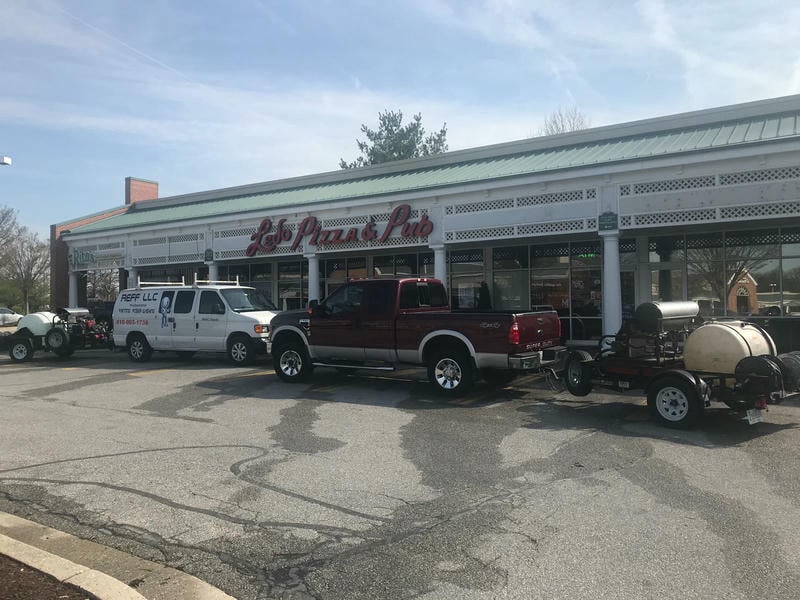
Before anyone reads your sign, checks your hours or steps inside, they have already formed an opinion from the outside of your building. Gray streaks running down from the roofline. Black gum spots scattered across the sidewalk. A green film creeping along the shaded side of the wall. None of these is dramatic on its own, but together they tell visitors the property is not getting much attention.
Commercial building power washing is one of the most direct ways to change that message. For retail storefronts, office buildings, shopping centers, restaurants and multi-tenant properties, a professional cleaning strips away the buildup that slowly dulls an exterior and brings surfaces back to the condition they were built to show.
Below, we look at what storefront power washing actually removes, which cleaning method suits which surface, how often businesses should schedule it, and when it makes sense to bring in a professional crew.
Most owners and property managers see their building from the same parking spot every morning. Customers take a different route, and they notice different things.
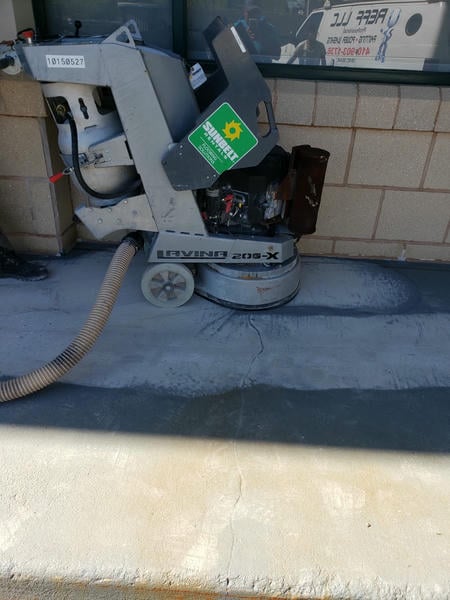
The few square feet in front of the door take more abuse than any other part of the property. Foot traffic grinds dirt into the concrete, gum hardens into dark circles, and winter leaves a white crust of deicing salt. Around restaurant entrances, spilled drinks and food stains hold onto more dirt every week they stay.
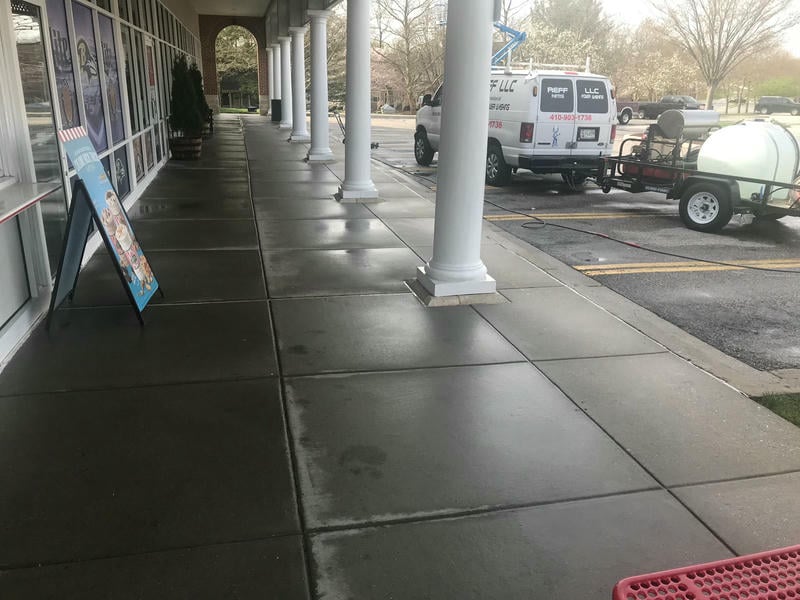
Sidewalk pressure washing is often the most noticeable improvement a storefront can make, because it is the surface every single visitor walks across.
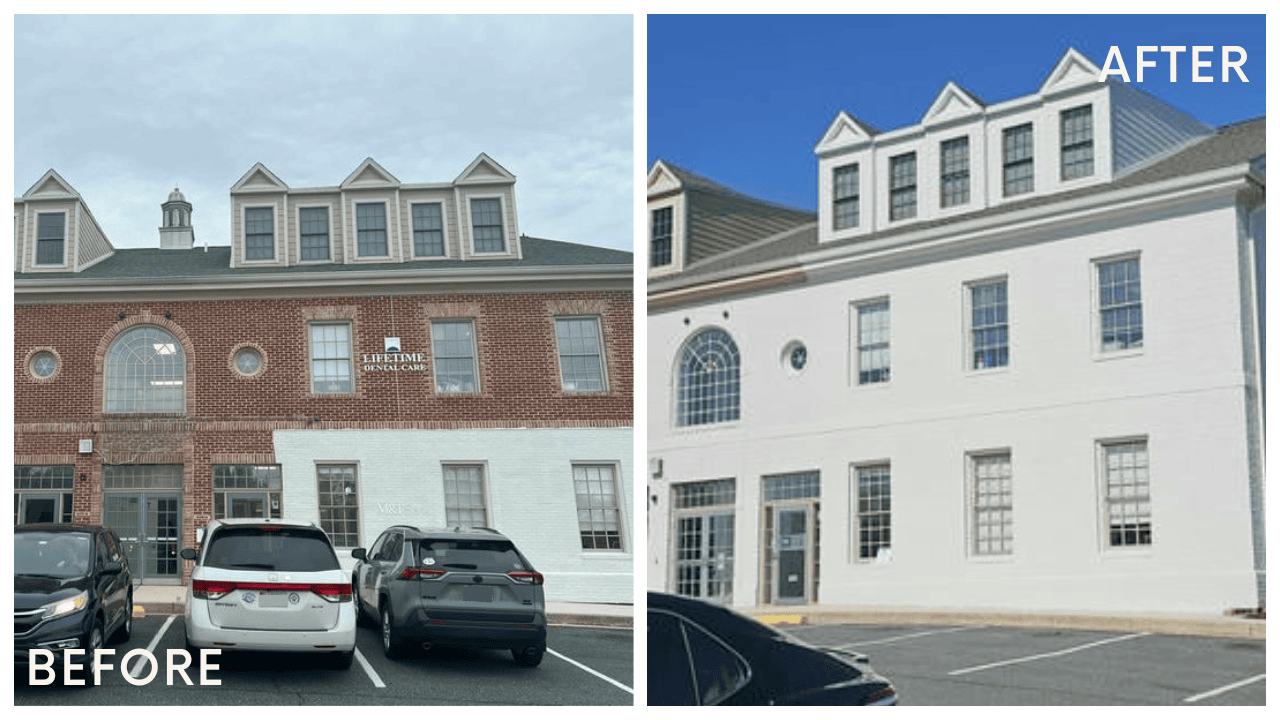
Exterior walls collect a film of road grime, exhaust residue and airborne dust. It builds so gradually that most owners do not see it until one section gets cleaned and the line between clean and dirty shows up. That film is exactly what building exterior cleaning is designed to lift.
Fabric awnings fade and stain. Light-colored stucco and EIFS pick up dark streaks under windowsills and parapet caps. Even signage loses contrast when the wall behind it turns a shade darker.
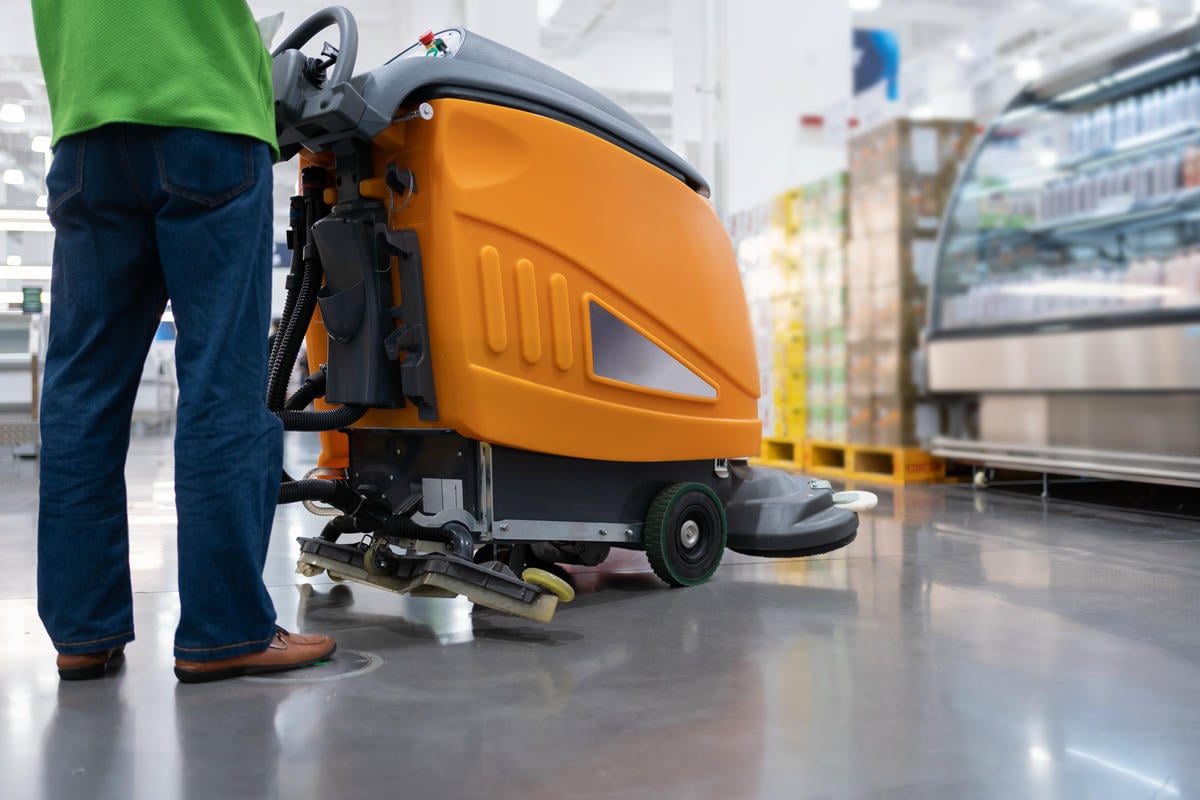
Side and rear elevations, drive-thru lanes, dumpster enclosures, loading areas and that one shaded corner where algae grows tend to get skipped until they become a problem. Customers notice them more than owners expect, especially at shopping centers, where the back of one tenant's space is the walking path for another. That is why commercial building power washing should be scoped around the whole property, not just the front wall.
A good exterior cleaning is less about blasting water and more about knowing what is on the surface. Different contaminants call for different treatment.
Dirt, dust and traffic film come off most hard surfaces with the right pressure and detergent. Mold, mildew and algae, usually concentrated on north-facing walls and areas shaded by trees, need a cleaning solution that kills the growth rather than just knocking down the visible layer. Otherwise, it comes back within weeks.
Chewing gum, grease and oil, the usual trouble spots around restaurants, food courts and dumpster pads, respond best to heated water, which breaks them down far faster than cold water can. Seasonal buildup is part of the picture too. Spring pollen leaves a yellow-green coating on storefronts across Maryland every year, and fall brings tannin stains from wet leaves sitting on concrete.
Some problems need more than washing. Efflorescence, the white mineral deposit that forms on brick and block, usually requires a specific masonry cleaner. Rust stains from metal fixtures and irrigation water also need targeted treatment. An experienced commercial power washing contractor should spot these during the walk-through, not halfway through the job.
People use these terms interchangeably, but they describe different approaches, and picking the wrong one is how building exteriors get damaged.
Commercial soft washing uses low pressure, close to garden-hose strength, combined with cleaning solutions that do most of the work. It is the right call for stucco, EIFS (often called Dryvit, after the brand), vinyl siding, painted surfaces, awnings and canopies. High pressure can gouge, etch or force water behind those materials.
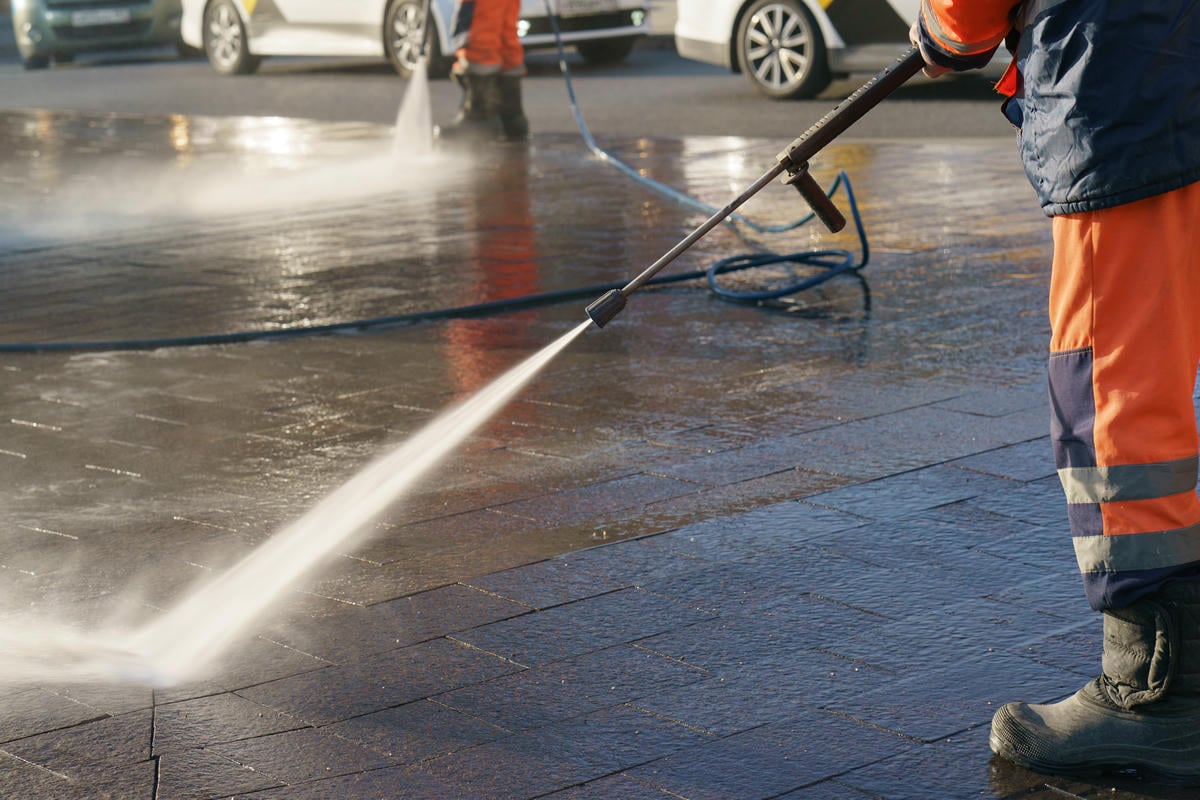
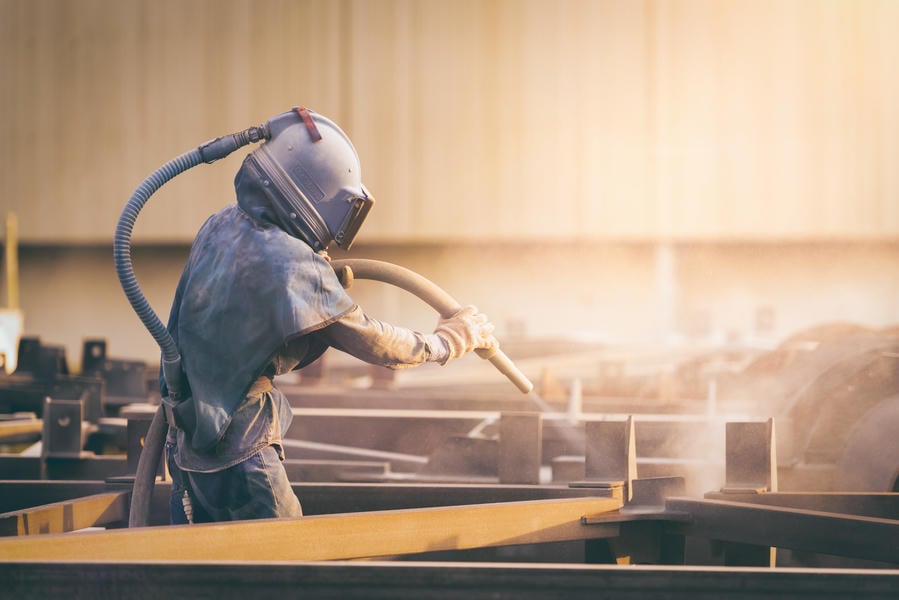
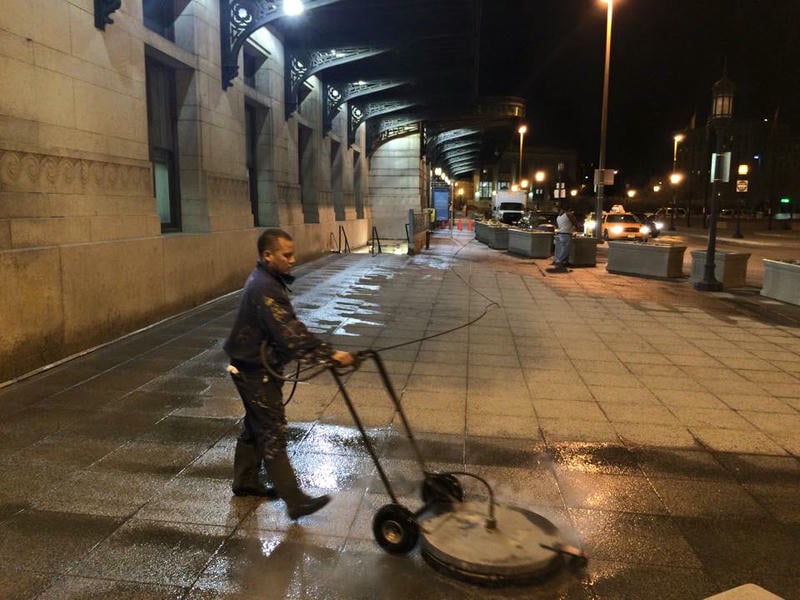
Commercial pressure washing uses high-pressure cold water on hard, durable surfaces such as concrete sidewalks, brick walls, loading docks and parking areas, where mechanical force lifts surface dirt and stains.
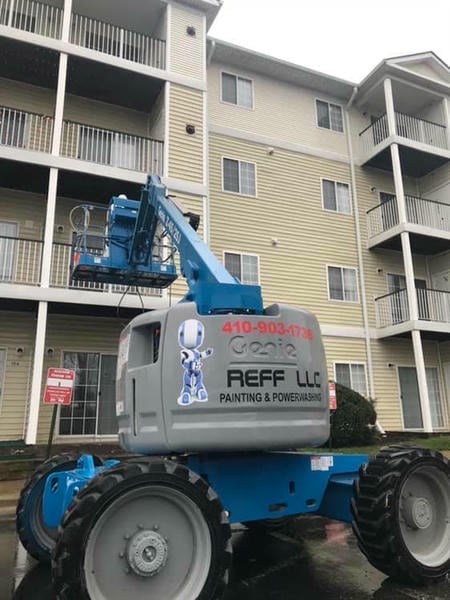
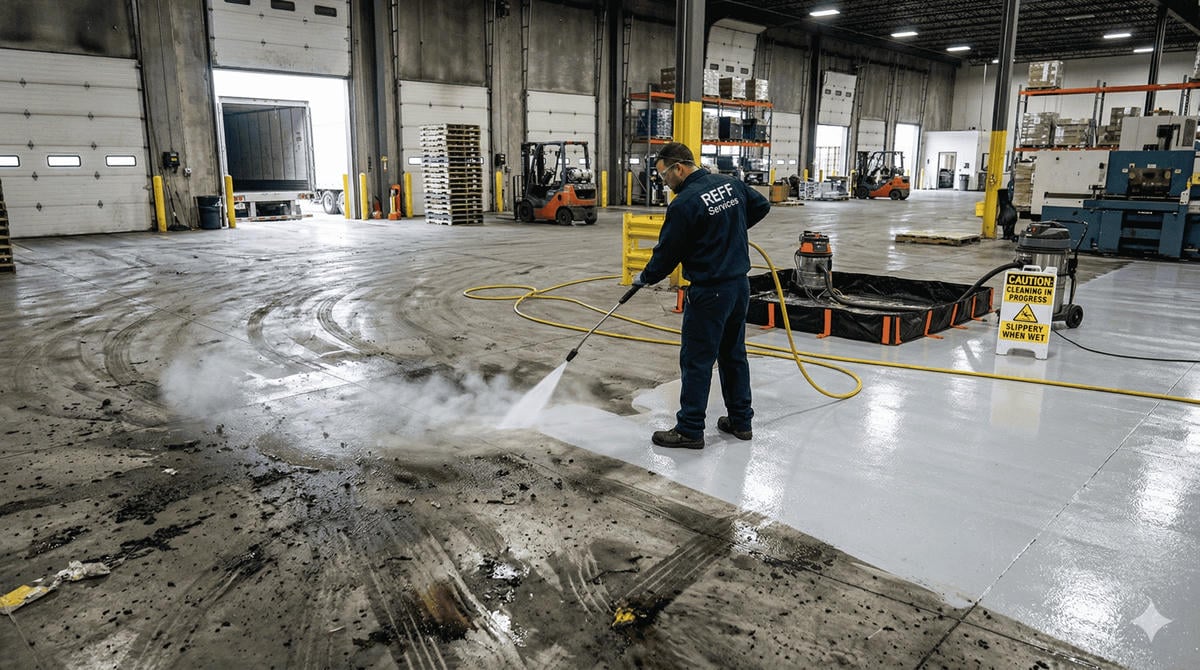
Commercial power washing adds heat. Hot water combined with high pressure is the tool for grease, oil, gum and the stubborn residue that cold water only smears around. REFF Services' truck-mounted units deliver up to 3,000 PSI at 8 gallons per minute with water heated to 200°F, the kind of setup that makes gum removal on a busy shopping center sidewalk practical.
Most storefront power washing projects use more than one method. A typical retail exterior might get a soft wash on the EIFS façade and awning, hot-water power washing at the entrance and sidewalk, and pressure washing on the brick side walls and dumpster pad, all in the same visit.
No single schedule fits every property, and anyone quoting one without seeing the building is guessing. The right frequency depends on foot traffic, nearby trees, how much sun each wall gets, whether food is served on site, and what the lease or property management standards require.
A practical way to think about it: entrances and sidewalks need attention far more often than walls and rooflines. Many businesses split the work, keeping entrances and walkways on a regular cycle while scheduling full commercial building power washing less often.
In Maryland, Washington DC and Northern Virginia, seasonal timing matters as well. Spring is a natural time to clear winter salt residue and the pollen that follows it. Fall works well for removing summer mildew before cold weather sets in. And washing ahead of a grand opening, a lease-up, a property sale or a repainting project makes sense whatever the calendar says.
Appearance is the obvious payoff, but regular commercial pressure washing also does real maintenance work.
Algae and grease on walkways are slip hazards, and removing them lowers the risk around entrances and loading areas. Contaminants left sitting on paint, sealants and coatings break those finishes down faster, so routine cleaning extends the life of what has already been applied.
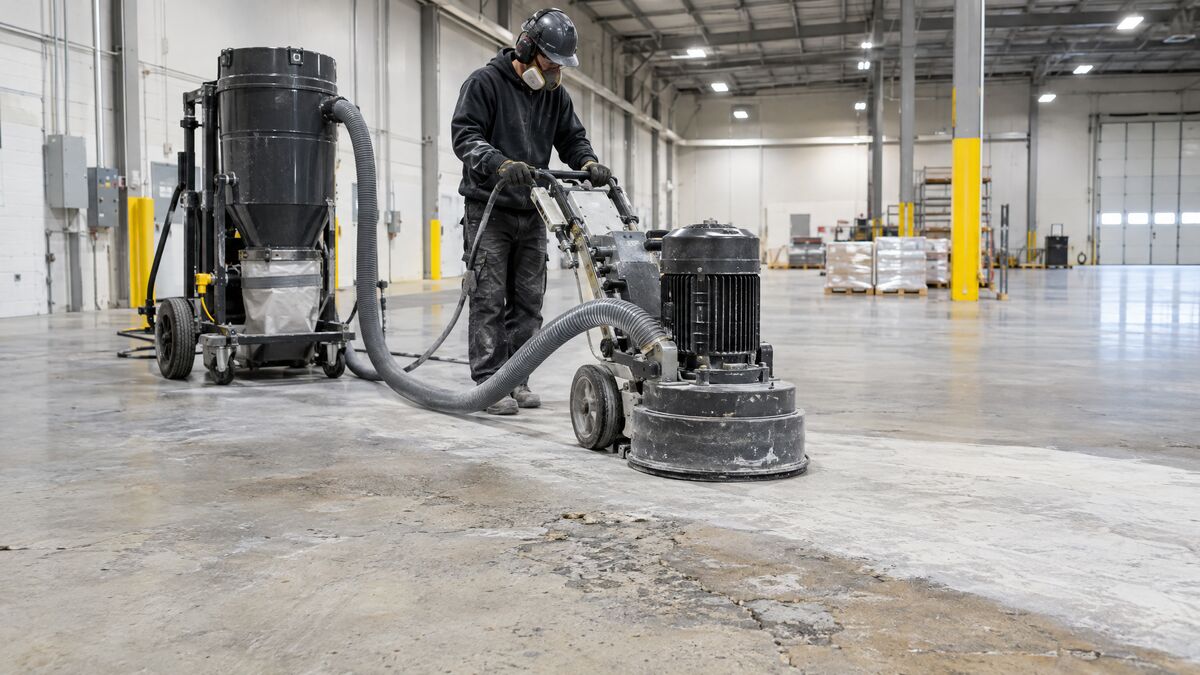
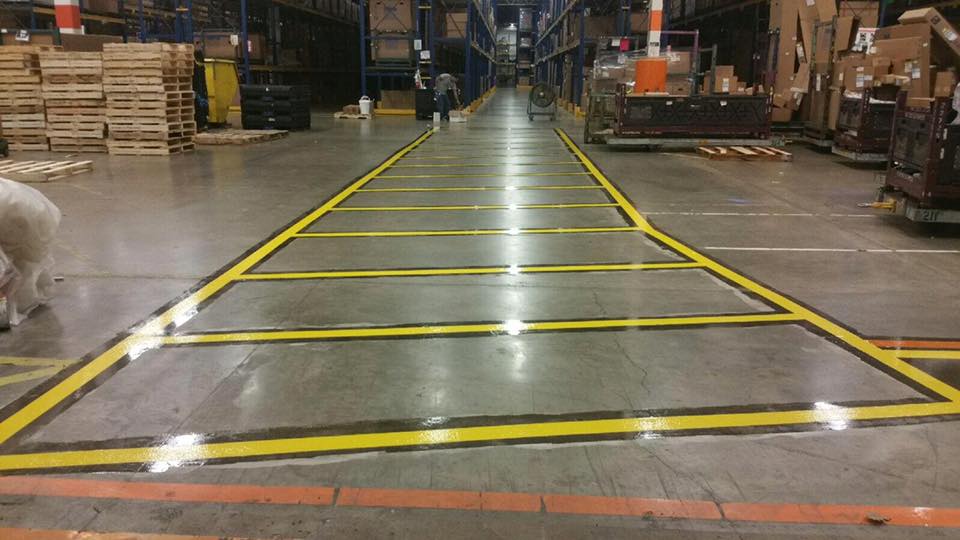
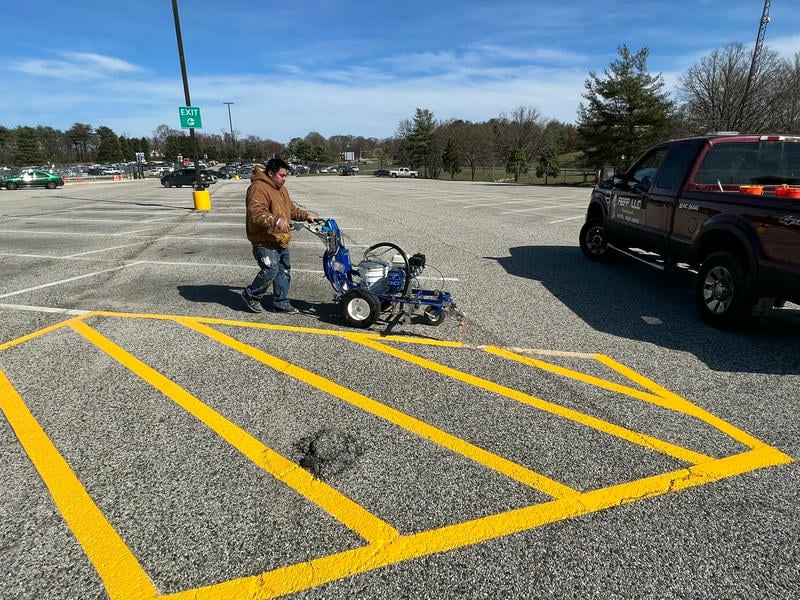
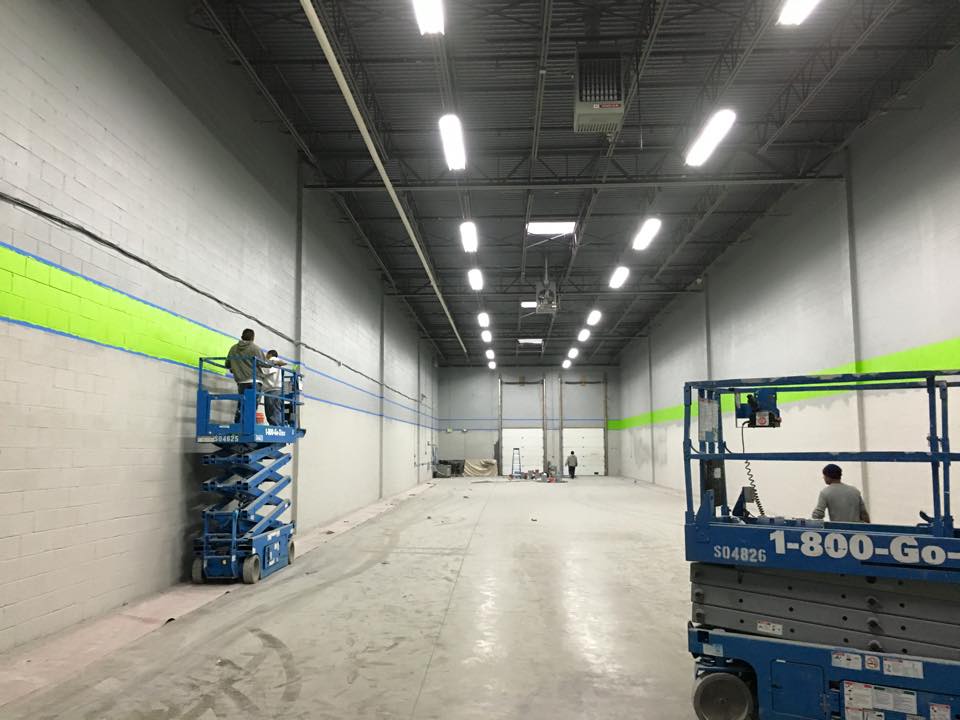
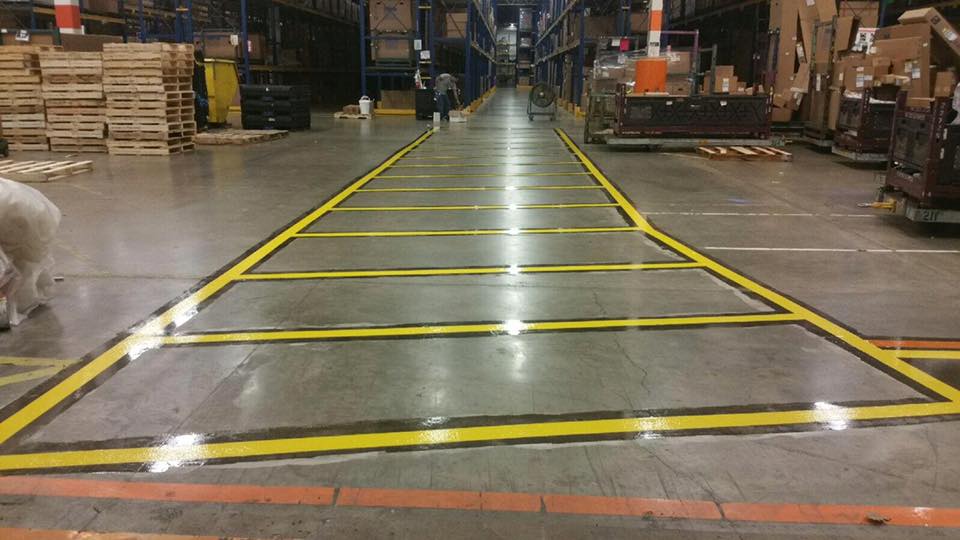
When a building is due for repainting, power washing becomes part of the surface preparation. Paint applied over dirt, chalking or mildew does not bond well and tends to peel early, which is why REFF Services builds washing into the prep stage of its commercial painting projects. The same logic applies before parking lot striping, where markings simply last longer on clean pavement.
Renting a pressure washer looks like a saving until something goes wrong. The most common problems are avoidable with experience and the right equipment.
Too much pressure, the wrong nozzle or a wand held too close can etch concrete, chip paint, erode soft mortar, damage window seals and drive water behind EIFS and siding, where the damage may not show up for months. Knowing when to back the pressure off and let the cleaning solution do the work is a big part of the job.
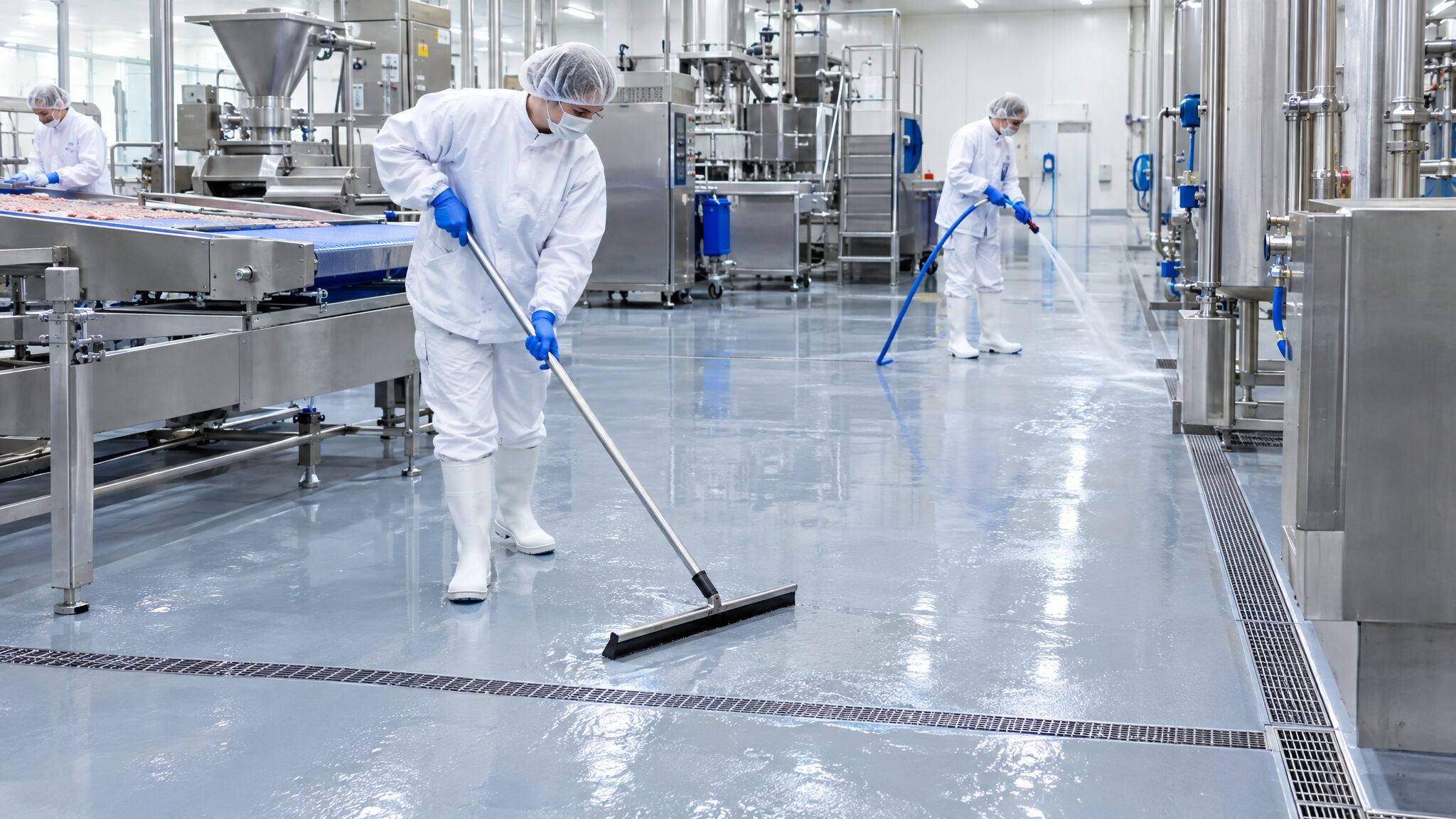
Wash water from a commercial property can carry oil, grease, detergent and debris. Letting it run into a storm drain can violate local stormwater rules. Environmental power washing uses drain covers, berms and vacuum recovery to capture that water before it leaves the site.
REFF Services provides environmental commercial power washing and can supply documentation for shopping centers, property managers and food service clients who need a record of compliance.
A storefront that closes for a day loses a day of sales. Professional crews plan around operating hours, stage equipment away from entrances and section off walkways so customers and employees can still get in and out safely.
Ask which method will be used on each surface, and why. Ask how wastewater will be captured. Ask how the crew will protect windows, landscaping, signage and lighting, and confirm they carry insurance. A contractor who answers those questions clearly before the job starts is usually the one who will do it right.
The outside of your building is the one part of your business every customer sees. Keeping it clean does not take a major investment, just a plan, the right method for each surface and a crew that understands commercial properties.
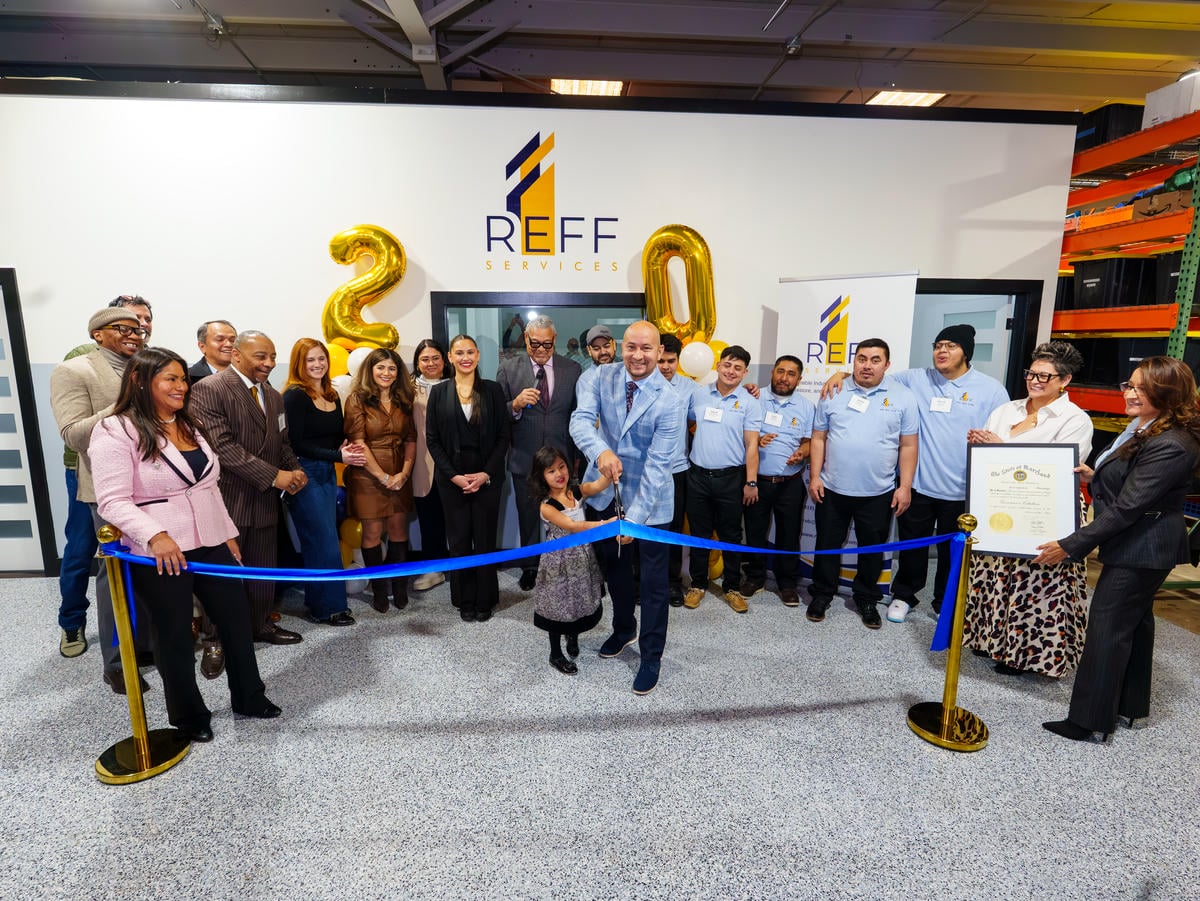
REFF Services has provided commercial building power washing, storefront cleaning and exterior surface preparation since 2005 for retail centers, office buildings, restaurants, warehouses and industrial facilities across the Baltimore metro area, Washington DC, Northern Virginia and Southern Pennsylvania.
Share this post: