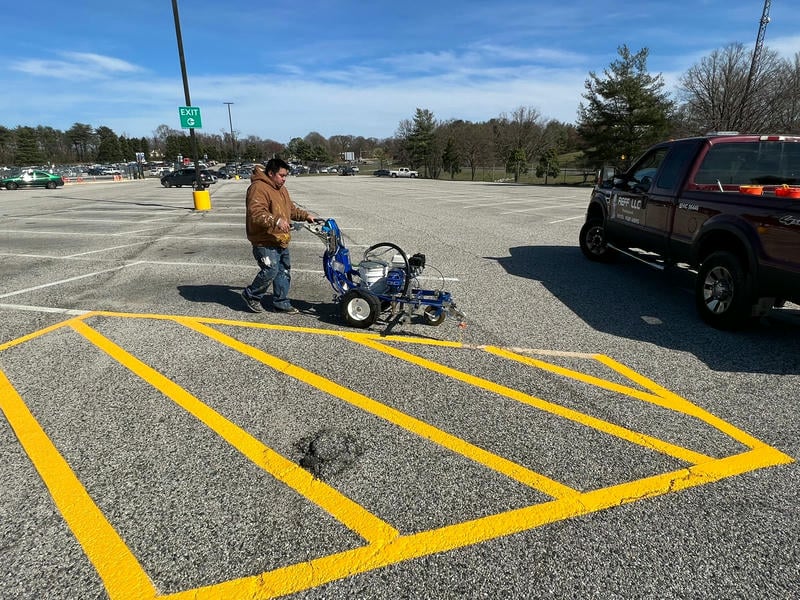
In most cases, a commercial parking lot should be restriped once a year.
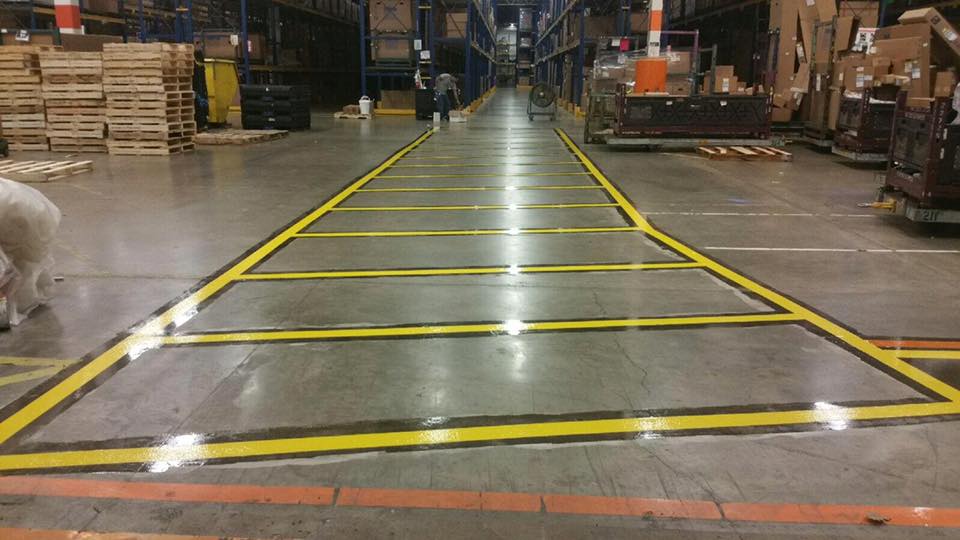
Annual striping helps keep parking spaces, traffic lanes, loading zones, fire lanes, and accessible areas clearly visible. It also gives property managers a chance to correct fading before the lot becomes difficult to navigate.
Some parking lots may need touch-ups sooner, especially when they experience heavy traffic, harsh weather, snow removal, or frequent truck activity.
Parking lot markings are exposed to vehicles, sunlight, rain, snow, ice, cleaning, and normal pavement wear.
Over time, bright lines become dull and difficult to see. Snowplows, delivery trucks, and heavy equipment can cause markings to wear even faster.
Once the lines begin fading, drivers may have trouble understanding where to park or how to move through the property.
Parking lot striping is about more than appearance.
Directional arrows, traffic lanes, stop bars, loading areas, and no-parking zones help drivers move through the property safely and efficiently.
When those markings are unclear, people may create their own parking spaces or traffic patterns. This can lead to congestion, blocked access, and confusion for employees, customers, and delivery drivers.
The parking lot is often the first part of a property that visitors see.
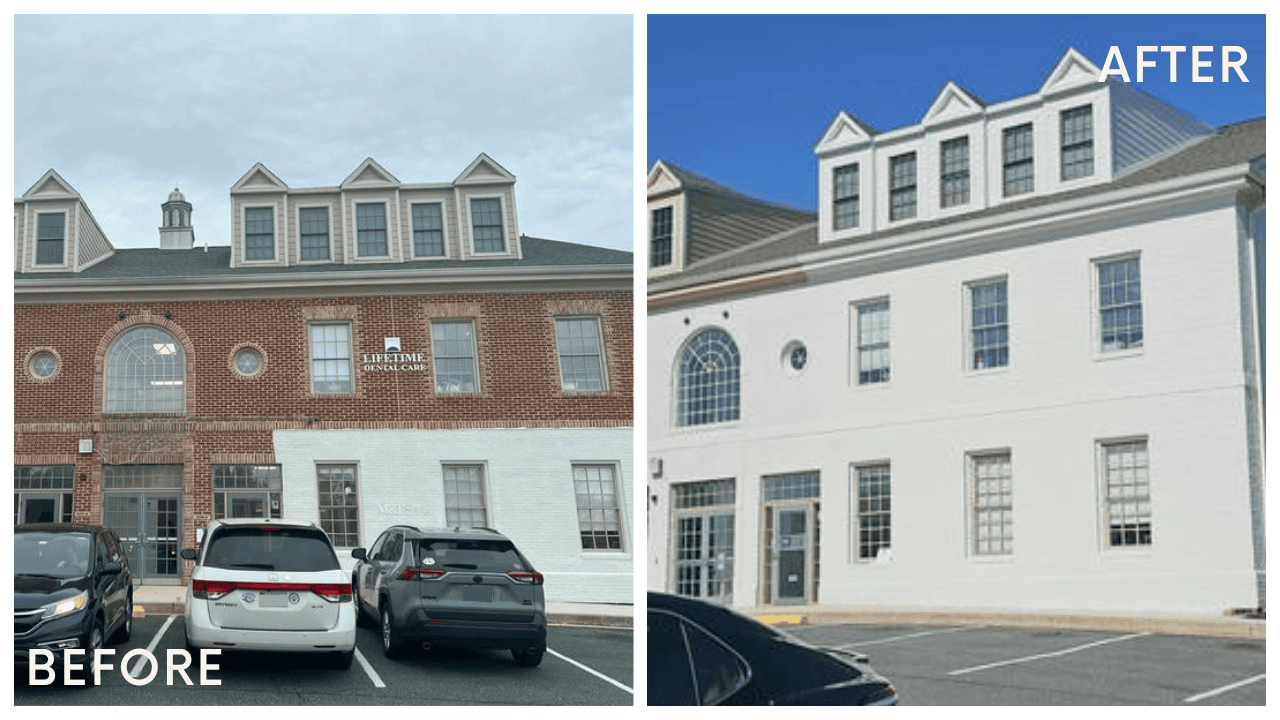
Fresh, visible lines make the property look organized and cared for. Faded markings can make even a well-maintained building appear neglected.
Restriping once a year is a relatively simple way to improve the appearance of the entire property.
Accessible parking spaces and access aisles should remain easy to identify.
These areas may need attention before the regular annual schedule if the symbols or boundary lines become worn. Property managers should inspect them throughout the year instead of waiting until they are almost invisible.
The layout should also be reviewed before restriping begins to make sure it still matches the needs of the property.
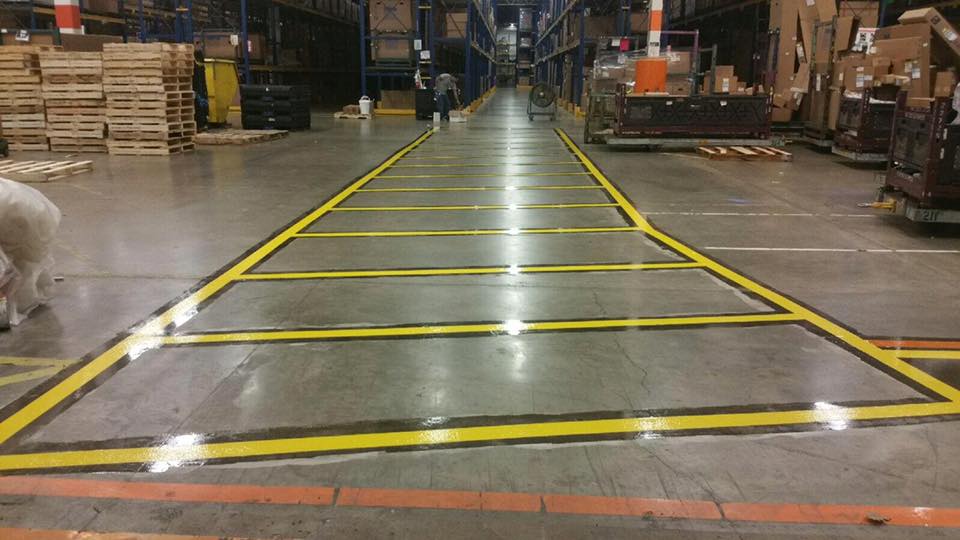
Industrial and commercial properties often have areas that experience more wear than regular parking spaces.
Loading zones, delivery areas, fire lanes, and truck routes may fade faster because of heavy vehicles and constant use. These areas should be checked regularly and touched up when needed.
Keeping them visible supports smoother operations and helps prevent vehicles from blocking important access points.
A parking lot may need work before the one-year mark when:
Regular inspections make it easier to catch these issues before they affect the entire lot.
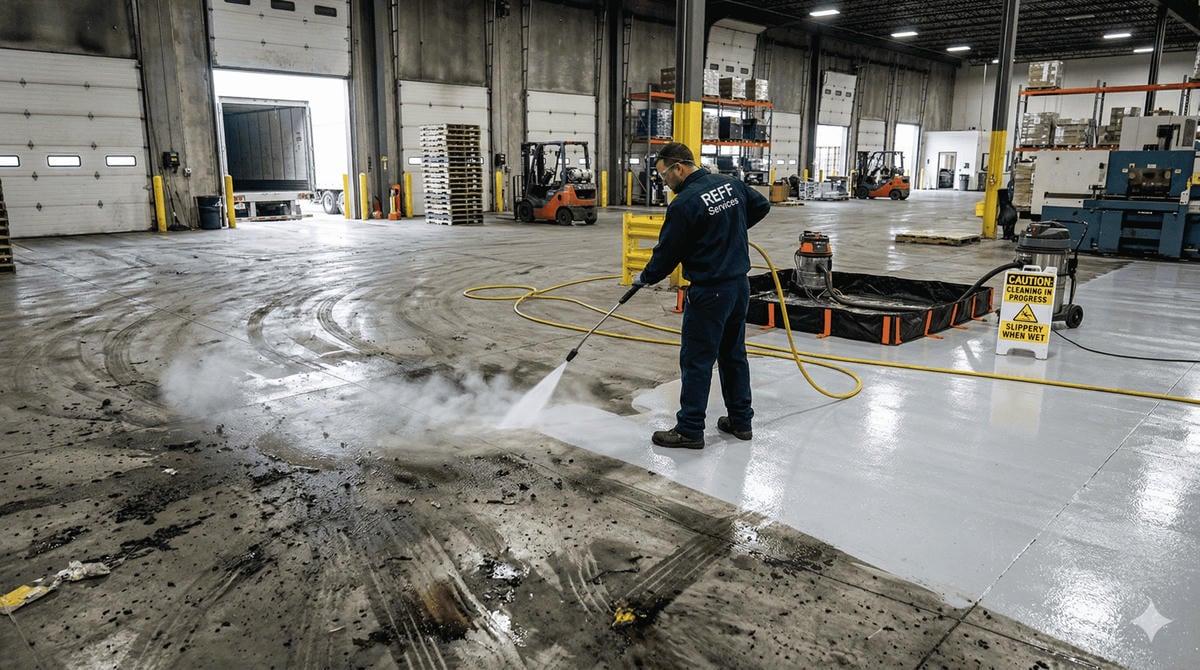
The parking surface should be reasonably clean and dry before new markings are applied.
Vehicles, equipment, and temporary obstacles will need to be removed from the work area. The contractor and property manager should coordinate closures so the work can be completed without creating unnecessary disruption.
Larger lots can often be divided into sections, allowing part of the property to remain open.
Commercial parking lots should generally be restriped once a year to maintain visibility, organization, safety, and appearance. High-traffic areas may require additional touch-ups between annual services.
REFF Services provides commercial parking lot striping throughout Baltimore and surrounding Maryland communities.
Share this post: